
A conversation is messy. People interrupt, hedge, recover, and land points in ways a transcript alone can't capture. So how do you turn that into a score that a leader can trust and a learner can act on? Here's the short version.
Two models, one framework
Every conversation runs through two measurement models. The verbal model looks at structure, clarity, discovery and how objections were handled. The non-verbal model looks at delivery: tone, composure and pace. Both map onto your organisation's own competency framework, not a generic template.
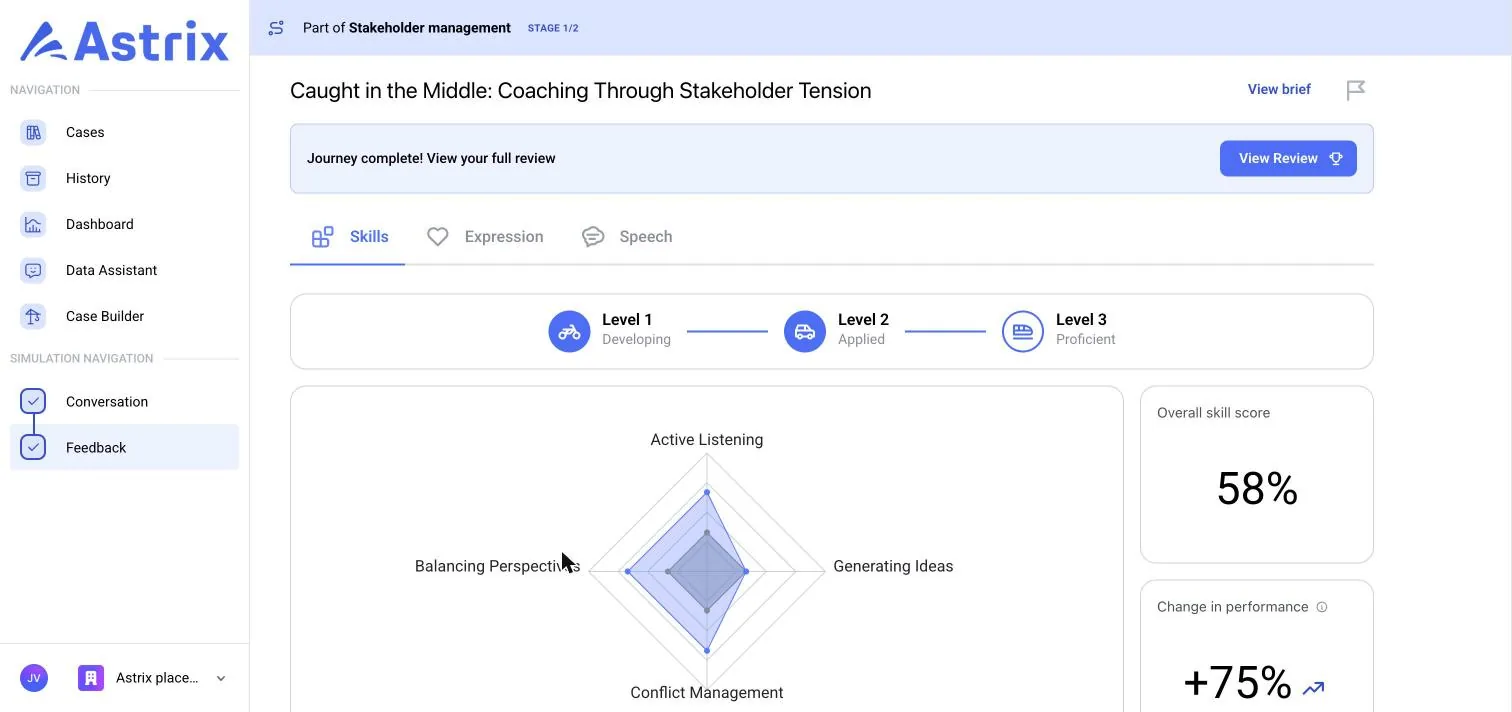
A finished conversation: radar, level, overall score, and the change since last time.
Calibrated, not arbitrary
Raw model output isn't the final word. Scores are calibrated for consistency across scenarios and reviewed with expert oversight, so a "7" means the same thing on Tuesday as it did last month. That's what makes the number comparable, between two simulations, across a team, over a quarter.
Behaviour becomes comparable performance data, with a level, an overall score, and the change over time.
Explainable by design
A score without a reason is a black box. Every competency comes with written feedback tied to specific moments, so the person can see not just where they landed, but why, and exactly what to practise next.